
Mood Regulation Skills — What You're Actually Trying to Build
What you're actually trying to build — and why the techniques aren't it
You have read about the techniques. Box breathing. The TIPP skill. Grounding exercises. Cognitive reappraisal. You may have taken a course, downloaded a worksheet, bookmarked an article. And then a real moment arrived — the argument that escalated faster than you expected, the anxiety that hit before you could catch it — and the techniques were not there. Not because they are wrong. Because you were looking for something in a place where it had never been stored.
Mood regulation skills are not techniques you deploy in a crisis. They are capacities you build in the absence of one. That distinction changes everything about how you develop them — and why most people, despite years of reading about emotion regulation, find they cannot access what they know when they need it most.
What a Skill Actually Is
There is a difference between knowing a technique and having a skill. Knowing a technique means you have encountered it, understand its logic, and can describe it accurately. Having a skill means it is available to you automatically — under conditions of stress, time pressure, and distraction — without requiring you to remember it first.
The gap between those two states is where most regulation work collapses. People learn the techniques in conditions of relative calm. They read about them, practice them briefly, and then return to ordinary life. When a high-arousal moment arrives, they reach for the technique and find that the cognitive load of distress has put it out of reach. The architecture that was supposed to help requires exactly the cognitive resources that distress erodes.
This is not a failure of the technique. It is a mismatch between how the skill was built and how skills under pressure actually work. A skill that is only accessible when you are calm is not a regulation skill. It is a relaxation technique.
Why the Techniques Disappear Under Pressure
Seneca mapped the mechanism precisely in On Anger, and it holds two millennia later. He described the progression of an emotional episode in three stages.
The first is involuntary — an immediate physical and cognitive response to a trigger that no amount of reasoning can prevent. Your heart rate spikes. Your attention narrows. You feel the pull of the emotion before you have had any chance to evaluate it. Seneca called this a “preparation for a passion, and a threatening of one.” It is not the passion itself; it is the body bracing for it.
The second stage is where reason still has purchase. The initial impression has arrived but has not yet taken over. You can still respond rather than react — if the capacity to do so is already in place.
The third stage is where that capacity disappears. As Seneca wrote: “the third emotion is already beyond our control, because it overrides reason.” At this point, you are not making decisions. You are executing a pattern. Reason is not offline exactly — it is being overridden by something faster and more insistent.
Reason is unable to overcome these habits, which perhaps might be weakened by practice and constant watchfulness.
The implications are specific. If your regulation skills only exist at the level of conscious recall — if they require you to think “I should use the box breathing technique now” — they live at the second stage. The moment you slide into the third, they are inaccessible. The only intervention point is before the trigger arrives.
What “Building” Actually Requires
Seneca’s phrase is “practice and constant watchfulness.” The two words matter equally.
Practice means repetition in low-stakes conditions. Not crisis management, but daily contact with the mechanism of regulation — noticing the first-stage impulses as they arise, examining the second-stage interpretations before they solidify, building the habit of pausing between impression and response. The neuroscience here is consistent with the Stoic framework: what gets practised gets automated. The goal is not to have a toolkit you can reach for; it is to have already reached for it before the moment demanded it.
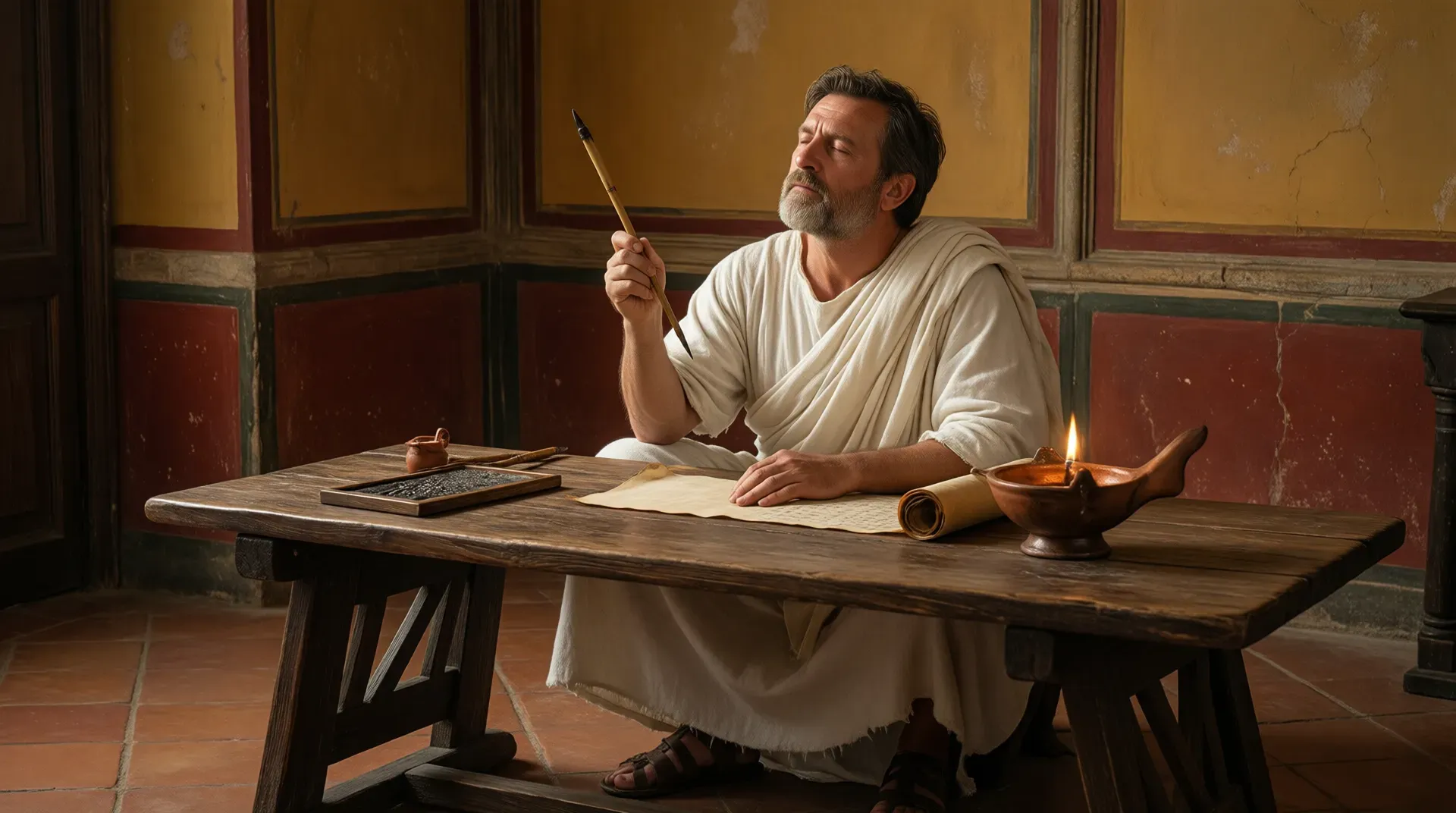
Watchfulness means the retrospective review. Seneca himself used an evening examination — a review of the day’s emotional events that was not about guilt but about pattern recognition. What triggered the first-stage response? Where did the second stage tip into the third? What would have been available if the capacity had been built differently? This is not journalling for self-expression. It is diagnostic practice. The examination builds the map that future practice follows.
The emotional regulation pillar collects the full range of these mechanisms. But the daily mechanism is worth stating plainly: the evening review is not supplementary to regulation practice. For most people who want their skills available under pressure, it is the practice.
The Distinction the Lists Miss
The reason mood regulation skills content underperforms its potential is that it conflates two things: knowing what skills exist and building the capacity to use them. Every list of regulation techniques is answering the first question. Almost none of them address the second.
This matters because the two questions require completely different approaches. Knowing what skills exist requires reading, understanding, intellectual engagement. Building the capacity to use them requires repetition, low-stakes practice, and retrospective review — not as occasional exercises but as daily structure. The skills you can use under pressure are the skills you have rehearsed outside of pressure.
Mood regulation strategies covers the landscape of what those strategies are and how they function mechanically. What emotional regulation actually requires goes deeper on the mechanism of regulation itself — what is happening in the brain and body during an emotional episode. This article is the third part of that sequence: what you are actually trying to build, and how building works.
What This Means in Practice
The evening review takes five minutes. Three questions: what triggered me today, what did I do with it, and what would a regulated response have looked like. Not as self-criticism. As calibration. The point is not to replay the day with regret; it is to strengthen the second-stage capacity that Seneca identified as the only real intervention point.
The Stoics understood that emotion cannot be eliminated and should not be. What can be developed — through practice and watchfulness — is the fraction of a second between the first impulse and the response it produces. That fraction is the skill. It is not a technique. It is not something you deploy. It is something you build, deliberately, in the space between one day and the next.