Guide to
The Examined Life
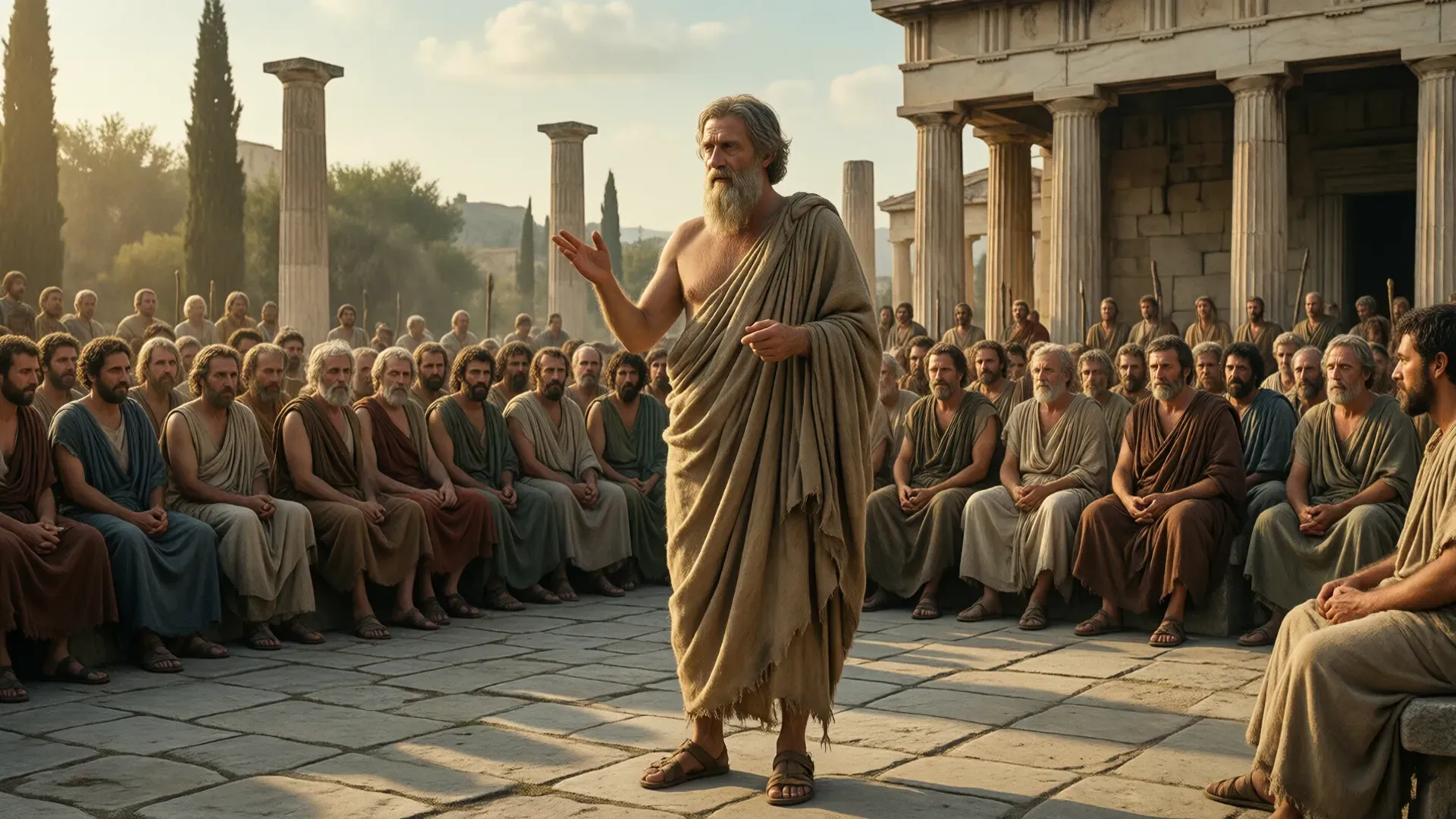
Socrates said it at his own trial. Not as a philosophical flourish — as a reason to accept the death penalty rather than stop doing the thing Athens was prosecuting him for.
The unexamined life is not worth living.
Most content about this quote explains what it means. This pillar explains why the unexamined life is so easy to live — the mechanisms that make non-examination the path of least resistance — and what doing the opposite actually requires.
What examination is
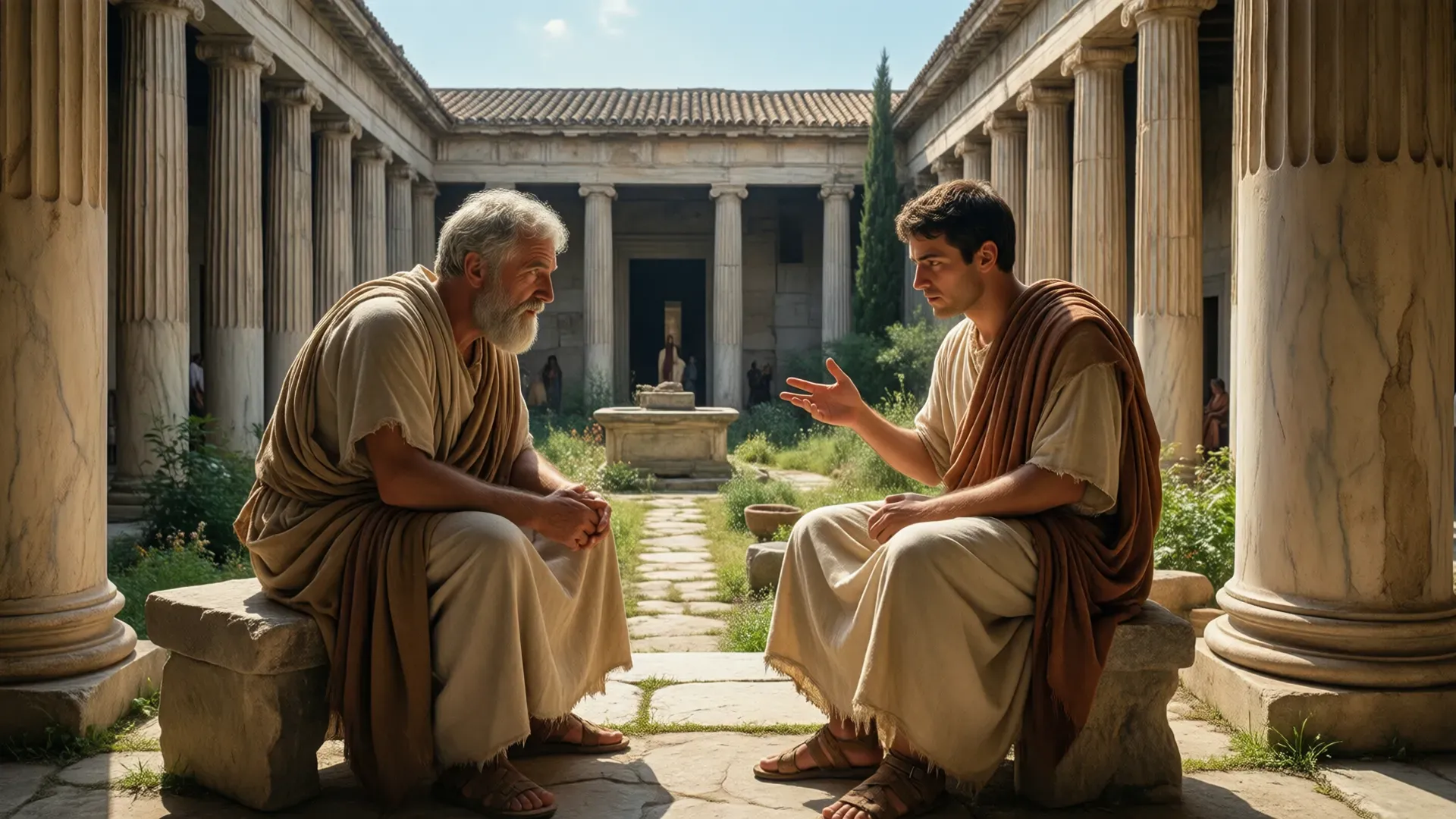
For Socrates, examination was not introspection. It was interrogation — the practice of taking the opinions you already hold and subjecting them to questioning until you found either their foundations or their cracks.
The unexamined life does not feel like a failure. It can look entirely successful. What it lacks is a person at the centre of it who has actually decided what they believe, who is living from examined principles rather than inherited ones.
Epictetus, teaching in the generation after Socrates, identified what makes non-examination so durable. He described two kinds of hardening: of the understanding, and of the sense of shame. The second is the one that matters. When the capacity to feel that your life might not be going well has been suppressed, most people call this strength. It is not. It is the absence of the signal that examination needs to function.
What the Stoics built on it
The Stoic tradition inherited Socrates’s insight and turned it into a practice.
Seneca, Marcus Aurelius, and Epictetus were not interested in examination as an intellectual exercise. They built structured daily routines for reviewing their responses — not to produce philosophy but to maintain the instrument that everything else depended on.
Seneca’s evening practice: pass the whole day in review before yourself, and repeat all that you have said and done. Conceal nothing. Omit nothing. The Meditations of Marcus Aurelius is the record of the same practice done in writing, every night, for years.
This pillar covers both the Socratic foundation and the Stoic practice that built on it — because the insight without the practice tends to remain exactly that: an insight.
What you’ll find here
The articles in this pillar cover both the Socratic foundation and the Stoic daily practice that built on it.
The Evening Review
The simplest implementation of the examined life: three questions, five minutes, at the end of the day.
- What happened?
- What did I make it mean?
- What would I examine more honestly?
This is the structure Seneca described, the structure Marcus Aurelius practiced, and the structure the Evening Review template is built on. Free, one page, no blank page required.